A Designer Who Built With AI, Here's What Happened
- Lee Murray
- Apr 7, 2026
- 5 min read
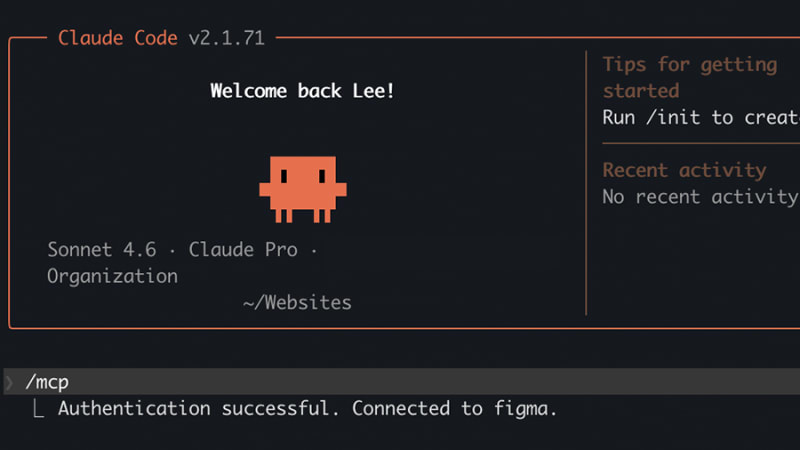
I want to write this carefully, because I'm wary of AI content that's either too much hype or too dismissive. What follows is what I actually did, what surprised me, and what I think it means for designers.
The project
Retro Delights is a personal site I've been setting up with my youngest, Alex. It started as a content site about retro gaming. But over the last couple of weeks I've been using it as a testing ground for building with AI, specifically Claude Code.
I'm a designer. I'm not a developer. I can read code and even write a bit, I understand how things fit together, but I couldn't have built what I'm about to describe on my own, not without it taking months of time I don't have.
What I built
Here's the list, I hope it's more useful than vague claims. You can see a lot of it live on this site:
- A full membership system using Netlify Identity and Stripe, subscribers pay, get access to premium content, and their role is updated automatically via a webhook
- A newsletter integration, new account signups are automatically subscribed, premium members tagged separately
- Several serverless functions handling webhooks, email confirmation flows, and subscription management
- A Space Invader easter egg in the footer that toggles the entire site colour scheme, complete with a synthesised retro coin sound using the Web Audio API
- A review score component for review posts, circular score, individual score bars, pros and cons, all driven by content data
- A full Lighthouse performance audit with a set of improvements off the back of it
That's not a small list. It was built iteratively, in conversation, over a series of sessions.
To be clear, this is a personal project. There's no engineering team, no test suite, no shared codebase, no production complexity at scale. The conditions that make engineering hard aren't present here. But that's also kind of the point, for exploration and learning, those barriers are gone.
What surprised me
The two things that surprised me most were the capability of the AI (Claude Code) and how much of the work was still mine. I'd expected it to be capable of writing code to deliver features I wanted, but it far surpassed what I thought it could do.
The decisions about what to build, how it should look and feel, where things should live, what the experience should be, all of that was still design work. What changed is that I could act on those decisions immediately. I could say exactly what I wanted and it happened.
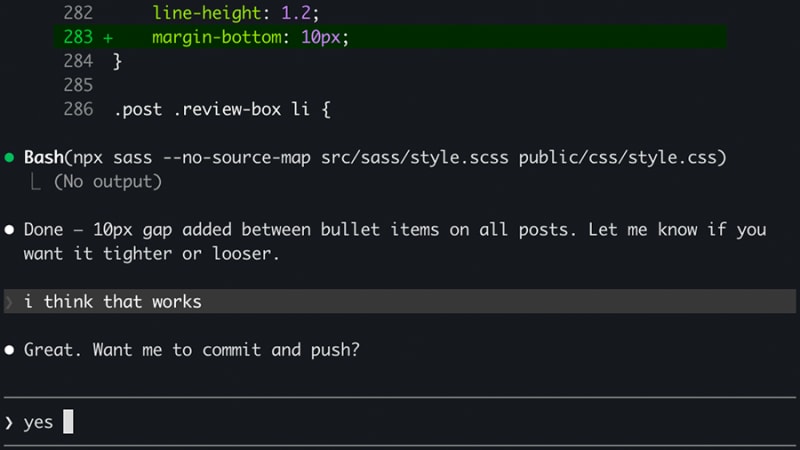
On a personal project, that's a meaningful shift. The gap between design thinking and shipped product improvements got a lot smaller.
The other thing I noticed is how much the quality of my input mattered. Vague instructions got vague results. Clear, specific, contextual direction got good results. That's just design communication, the same skills that make you clear on a problem make a good AI prompt.
Taking it further, Figma MCP and AI
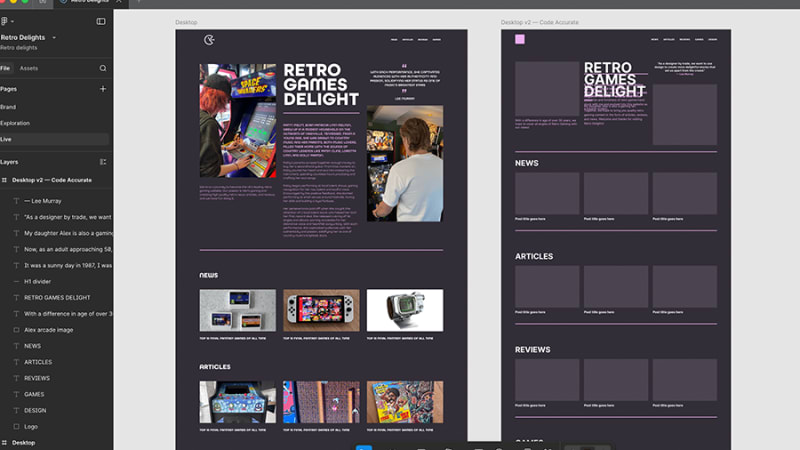
One of the more interesting experiments was connecting Figma's MCP server directly to Claude Code. Once connected, I shared the live Retro Delights home page design in Figma and asked Claude to replicate it and build it in Figma.
It gave me a reasonable starting point, the layout structure came through, the broad composition was recognisable. But it wasn't production ready. The fonts weren't right, some text overflowed headings, spacing was off in places, and the logo rendered as a plain square. It needed work.
But here's the thing, it was still useful. A reasonable starting point you can refine is faster than starting from nothing. And this is early days; the workflow will only get better as the tooling matures.
My takeaways
I work for AutoTrader and we're looking at how AI can help our designers' workflow. The interesting question isn't whether it's perfect right now, because it isn't. The question is broader than just accelerating the path from design to code. It's whether AI can help earlier in the process too, framing problems more clearly, shaping research questions, stress-testing thinking before any design work starts. And on the output side, whether connecting AI to Figma, our design system and brand guidelines could meaningfully close the gap between design and production, and help designers engage more directly with code themselves. Based on what I've seen, I think the answer is yes, with time.
I think it's important to be actively exploring how AI can help, rather than waiting to see how it plays out. It feels like the right conversation to be having, and the answer is probably going to be more nuanced than most people expect.
What it can already do is make acting on an idea almost as easy as having one.
I've always believed you learn more by doing. Reading about AI tools or watching videos only gets you so far. Building something real, with real constraints, real integrations, real users, teaches you things you can't get any other way.
The designers who'll get the most from this are the ones willing to find out for themselves, and that's why I'd encourage anyone curious about it to just start.
The views expressed here are my own and don't represent AutoTrader's position on AI or any related topics.
Discussion
No comments yet — be the first to say something.
Couldn’t load comments right now.